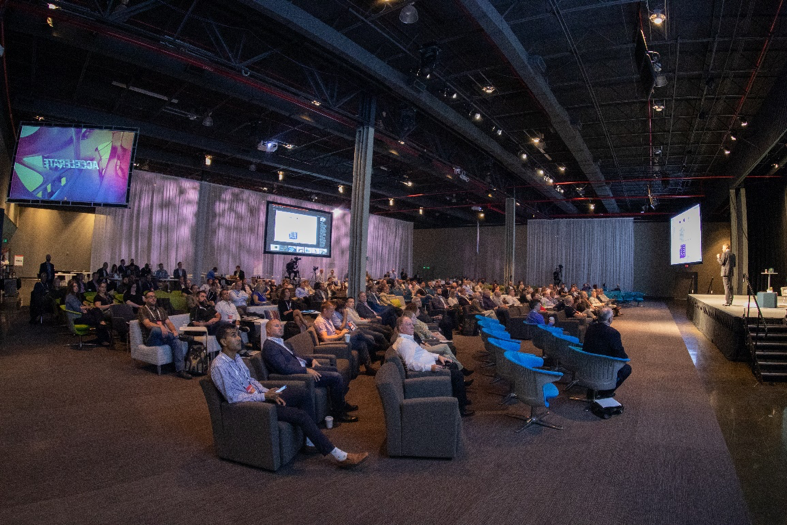
Known for transforming workplaces, Steelcase’s Learning + Innovation Center was an ideal venue for Autodesk Accelerate.
Last week, we came together with customers and partners in Grand Rapids, Michigan at our sixth annual Autodesk Accelerate conference. Why Grand Rapids? Aside from being known as “
Beer City, USA”—it’s home to more than 80 breweries—it’s the office headquarters of our friends at
Steelcase Inc. We spent three days at the Steelcase Learning + Innovation Center discussing how the future of manufacturing is playing out with customers across industries, from electric motorcycle manufacturer Lighting Motorcycles to renowned footwear and apparel company
Reebok. Our goal was simple: to help our customers continue to succeed by embracing the convergence of design and manufacturing, and yes, to consume plenty of beer.
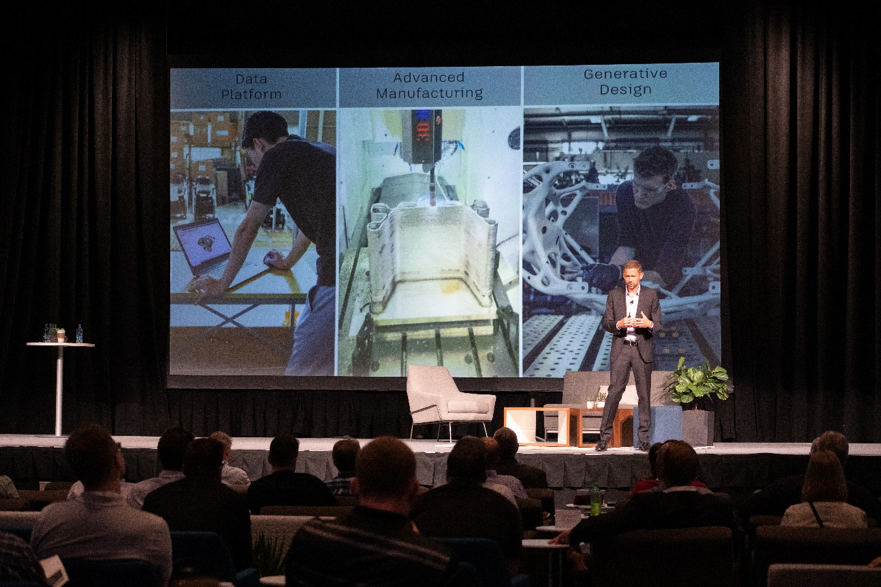
Stephen Hooper shares Autodesk’s vision for the Future of Making and the latest technology we’re introducing to Fusion 360 and Fusion Lifecycle.
Stephen Hooper, Autodesk VP and general manager of Fusion 360, kicked off the event keynote with an overview of digitization challenges, especially as companies continue to streamline practices and expand globally. He spoke about trends like additive manufacturing, automation, investments in machine learning, and how connecting supply chains to factory floors leads to better and more democratized efforts overall. This consolidation and convergence of design and manufacturing has led to our continued investment in an approach that we see as critical to the future: Autodesk’s
generative design technology.
Learn more about generative design for manufacturing
here!
Joining Stephen on stage was Steve Miller, CIO of Steelcase, who shared the company’s story of digital transformation after more than 100 years in business, and the impact its had on Steelcase’s IT and global expansion efforts. The company faced huge challenges with major impact on how people work and live, which they tackled by creating a more customer-oriented, data-driven, and innovative workforce. The company knew that by going digital and lean, it would disrupt its culture, experiences and spaces, but that their efforts would ultimately pay off for everyone involved.
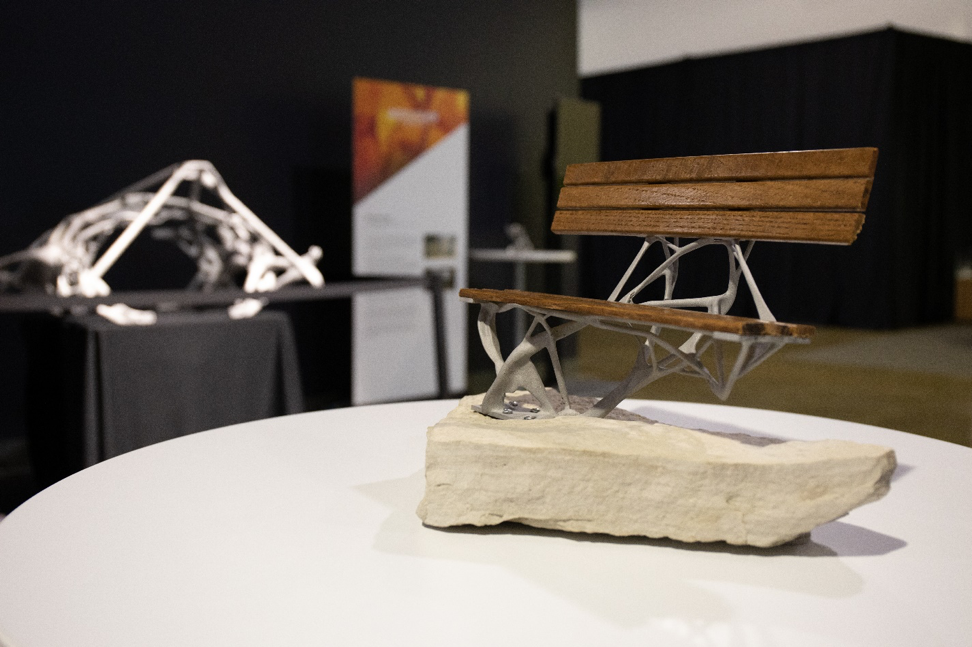
At Accelerate, several demos of generative design, including this bench prototype, were on display.
We heard from a variety of other customers who shared how they’re using Autodesk’s services and tools to drive value in their own business.
- Crown Equipment: A global manufacturer of material handling equipment, lift trucks and technology, Crown Equipment focused on how to first get its team on board with the concept of generative design long before implementing the software. Paul Magee, director of Industrial Design, extolled the need for empathy for people, specifically its design teams. “If they don’t understand what the product is and what it does, you have to try to demystify it,” he continued. “We leaned on Autodesk to help us. We used online videos and existing information to explain what generative design is.”
- Lightning Motorcycles Corp.: CEO and founder Richard Hatfield didn’t ride onto the stage on an electric motorcycle, but he did drive home a passion for building products with the best technology and value. His company’s mission is to build the world’s first two-wheel electric transportation with better efficiency, performance and affordability than current gas alternatives. Over the course of two generations of motorcycles, Autodesk and Lightning Motorcycles collaborated on ever lighter and faster models, and they’re continuing to explore new ways to expand and make an impact in regions that need it most.
- Reebok: In Reebok’s Human Performance Engineering Lab, scientists like Beth Wilcox design and conduct biomechanical research studies to evaluate and design optimal sports equipment, wearable technologies, footwear and apparel. Beth discussed the use of generative design in creating sport-specific footwear specifically tuned to motions and forces that athletes need for peak performance.
As you can see, we came away from Accelerate inspired by how these companies and others are applying newfound techniques to solve their own unique problems, and we’re looking forward to what’s ahead. Special thanks to all our attendees, customers and partners who attended this year’s event!